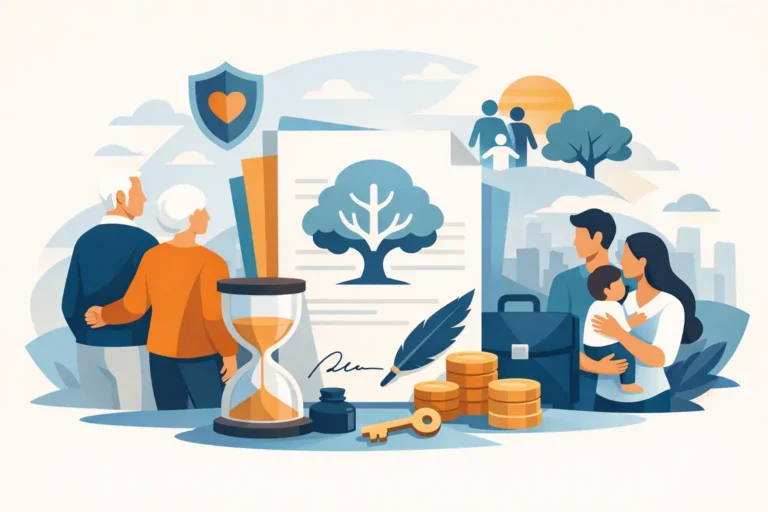

If something happened to you this year, would your family be financially steady for six months – or would they be forced into hard decisions right away? That question is usually where people begin to see how to create guaranteed family protection in a real, practical way. If you want help sorting through your options, you can request a free, no-obligation consultation and talk through what protection would look like for your family.
What guaranteed family protection really means
When people hear the word guaranteed, they often think it means nothing can ever go wrong. In financial planning, that is rarely how real life works. A better way to think about guaranteed family protection is this: putting dependable systems in place so your loved ones are not left exposed if income stops, health costs rise, or a death creates sudden financial strain.
So what would your family actually need protected? For some households, the biggest risk is lost income. For others, it is medical bills, debt, final expenses, or the possibility that a surviving spouse would need to carry the full load alone. The answer depends on your stage of life, your health, your savings, and who relies on you.
That is why protection is not just about buying one policy and hoping for the best. It is about building layers. The families who feel the most secure usually have a plan for immediate bills, a plan for longer-term income needs, and a plan for preserving what they want to leave behind.
How to create guaranteed family protection step by step
The first step is getting honest about your current exposure. If your paycheck stopped tomorrow, what would still need to be paid? Mortgage or rent, groceries, utilities, car payments, child care, health insurance, debt, and funeral costs are the obvious ones. But there are also the expenses people forget, like time off work for a spouse, travel for family, and ongoing support for children or aging parents.
Once you see the gap, the next question becomes clearer: what resources would your family actually have access to? Savings might help, but for many families, savings alone are not built to replace years of income. That is where life insurance, health coverage, final expense protection, and retirement safeguards start to matter.
A strong protection plan often begins with life insurance. If others depend on your income, coverage can help replace what would be lost and keep the household stable. If you are older, retired, or more focused on not burdening your children, final expense coverage may be the more immediate priority. If you have savings but worry about market risk or outliving your income, retirement protection strategies may need to be part of the conversation too.
This is where many people get stuck. They ask, should I focus on the cheapest option or the most coverage? Should I choose term or permanent coverage? Is health insurance the bigger issue right now? The truth is, it depends on what problem you are trying to solve first.
If your family is young and your main concern is income replacement, term life insurance may offer more coverage for a lower cost. If you want lifelong protection, cash value potential, or legacy planning benefits, permanent coverage may make more sense. If you are nearing retirement, preserving assets and covering final expenses may feel more urgent than replacing earned income. Good planning is less about chasing a one-size-fits-all solution and more about matching the tool to the risk.
The biggest gaps families miss
Most people do not ignore protection on purpose. They assume work coverage is enough, or they think they will handle it later. But later has a way of arriving at the worst possible moment.
One common gap is relying only on employer benefits. What happens if you change jobs, get laid off, or retire? Coverage tied to employment may not follow you the way you expect. Another gap is underestimating how much time a surviving spouse or family would need to recover financially. A small policy may help with burial costs, but would it keep the mortgage paid and the household running?
Health-related strain is another issue. A serious illness can create lost income even before it creates medical debt. And for self-employed individuals or business owners, the risk is often even greater because income may stop the moment they cannot work. If that sounds close to home, a free, no-obligation consultation can help you identify where your plan may be thin before a crisis exposes it.
Then there is legacy risk. People spend decades building a home, savings, retirement accounts, or a business, but never put a transfer plan in place. That can lead to confusion, unnecessary taxes, family conflict, or assets being used up faster than expected. Protection is not only about what happens when you are gone. It is also about making sure what you built reaches the people and purposes you care about.
Building the right mix for your stage of life
A family in their 30s usually needs something different than a couple in their 60s. That is why the best planning starts with questions, not products. Who depends on you today? What would happen if your income stopped? How much debt would still need to be paid? Are you trying to protect children, a spouse, a business, retirement income, or all of the above?
For younger families, the priority is often protecting earning power while the children are still at home and debts are highest. For people in their 40s and 50s, the picture can get more complicated because they may be supporting kids, aging parents, and preparing for retirement at the same time. For seniors, the focus often shifts toward final expenses, health-related concerns, income stability, and passing on assets in an orderly way.
There is also the question of affordability. Some people assume proper protection will cost too much, so they put it off. But having the wrong amount of coverage – or none at all – can be far more expensive for a family later. The goal is not to buy everything. It is to prioritize wisely and create a plan you can actually keep.
How to make your protection plan stronger over time
A protection plan should not be something you set once and forget. Families change. Income changes. Health changes. The policy you bought ten years ago may still be helpful, but it may not fully reflect your life now.
Reviewing your coverage after major milestones can make a big difference. Marriage, divorce, a new child, a home purchase, business growth, retirement, or a health diagnosis can all shift what your family needs. Even an old 401(k) or savings account sitting in the background may deserve a second look if your goal is stronger retirement protection or more efficient legacy planning.
This is also where coordination matters. If your life insurance, retirement accounts, health planning, and estate intentions are all disconnected, your family may inherit confusion instead of clarity. A more thoughtful approach brings those pieces into the same conversation. That does not mean making things complicated. It means making sure each part supports the others.
If you have been wondering whether your current setup is enough, this is a smart time to act. A free, no-obligation consultation can help you understand your options without pressure and see whether your existing policies, savings, and retirement plans are working together the way they should.
What families gain when protection is done right
The real value of a protection plan is not just the policy itself. It is the stability it creates. It gives a spouse time to think clearly instead of panicking. It helps children stay in the home and routine they know. It can prevent debt from swallowing savings. It can preserve dignity in retirement and keep final expenses from becoming someone else’s burden.
And maybe just as important, it creates confidence while you are still here. When you know there is a plan, financial decisions become easier. You are no longer reacting to fear. You are leading your family with intention.
That is what people are usually looking for when they ask how to create guaranteed family protection. They are not asking for a magic fix. They are asking how to reduce uncertainty, protect the people they love, and make sure years of hard work are not undone by one unexpected event.
If that is where you are, the next step does not have to be complicated. Start the conversation. Ask the hard questions now, while you have options. Schedule a free, no-obligation consultation and get clear on what would truly protect your family, your income, and the legacy you want to leave behind.
The strongest plans are rarely built in a rush. They are built when someone decides their family deserves more than hope alone.