A broken arm from a weekend fall can leave you with more than pain. It can mean an ER bill, follow-up visits, missed work, and the kind of financial stress that shows up right when your family needs stability most. That is why understanding accident insurance vs health insurance matters. If you want help sorting through your options, a free, no-obligation consultation can help you see what protection fits your budget and your bigger goals.
Accident insurance vs health insurance: what is the real difference?
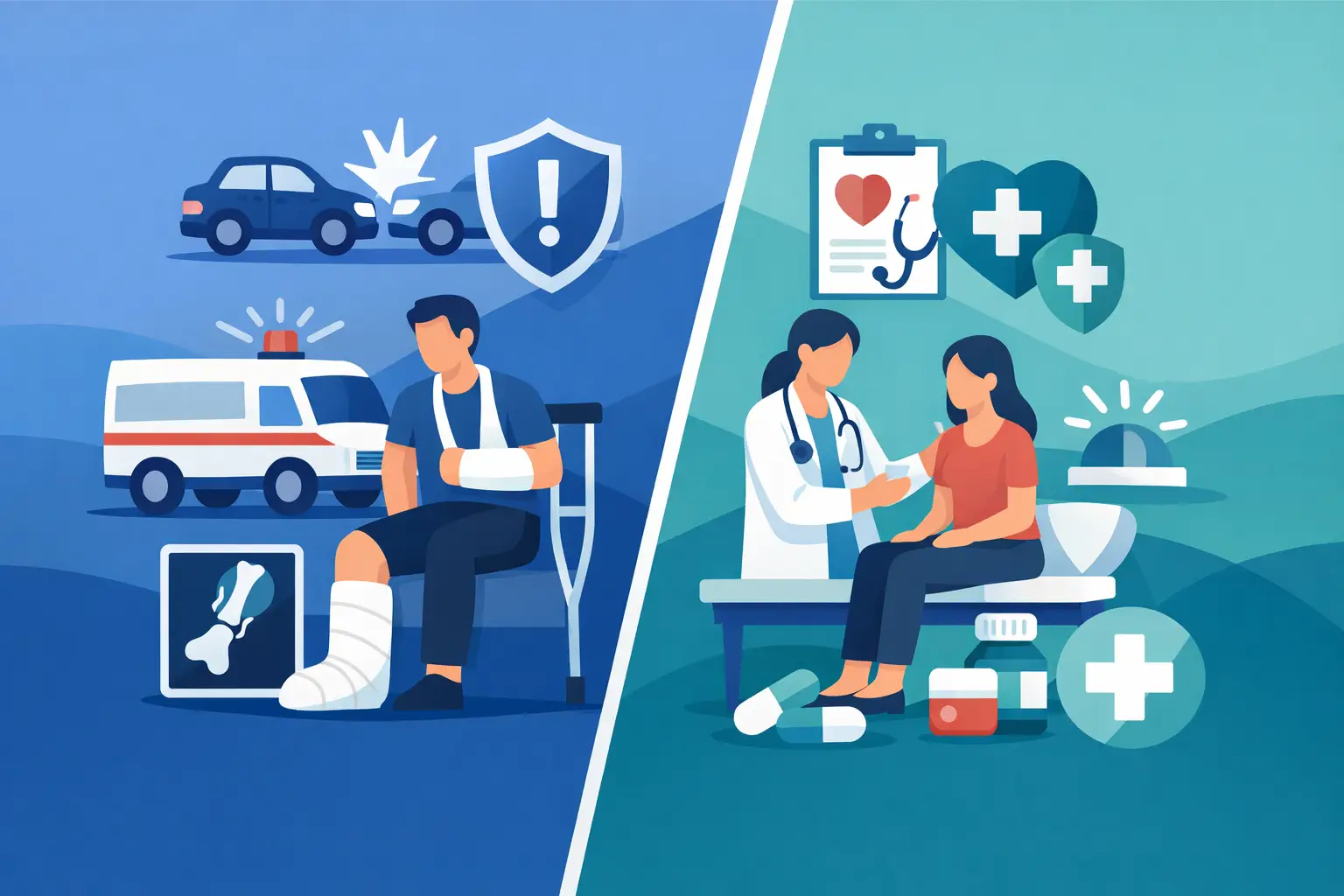
The simplest way to think about it is this: health insurance helps pay for medical care broadly, while accident insurance is usually designed to pay a cash benefit when a covered accidental injury happens.
That difference sounds small until real life gets involved. Health insurance is often your primary coverage for doctor visits, hospital care, surgeries, prescriptions, and preventive care. Accident insurance is more targeted. It is not meant to replace major medical coverage. Instead, it can help soften the financial hit from an unexpected accident.
So what happens if you slip on wet stairs, your child gets hurt in sports, or you are in a car accident? Health insurance may cover much of the treatment after deductibles, copays, and coinsurance. Accident insurance may pay you directly based on the injury or treatment listed in the policy. That cash can sometimes be used for more than medical bills, depending on the plan.
And that leads to a better question: are you only trying to cover medical treatment, or are you trying to protect your household from the full financial effect of an accident?
What health insurance is designed to do
Health insurance is the foundation. For most families, it is the plan that keeps a medical emergency from becoming a catastrophic expense.
It generally covers a wide range of care, including preventive services, physician visits, emergency treatment, hospitalization, lab work, mental health care, and prescription drugs. Depending on the plan, you may still have out-of-pocket costs such as a deductible, copays, and coinsurance. You also need to pay attention to provider networks and prior authorization rules.
This is where many people get surprised. They assume having health insurance means everything is handled. But have you noticed how often people still talk about large bills after a hospital visit? That is usually because health insurance was never designed to mean zero cost. It is designed to share risk, not erase every expense.
If you have a high-deductible plan, that gap can feel even bigger. You may be covered, but still responsible for thousands before the plan pays much. For a lot of working families and self-employed households, that is where pressure builds fast.
What accident insurance is designed to do
Accident insurance is narrower, but for the right situation, that can make it valuable. It typically pays a fixed cash benefit for covered accidental injuries or accident-related treatments. The exact amounts vary by policy.
For example, a plan may pay benefits for ambulance transport, emergency room care, fractures, burns, physical therapy, hospital confinement, or follow-up treatment after an accident. The payment usually goes directly to the insured person, not the doctor or hospital.
Why does that matter? Because the financial strain after an accident is not always limited to the medical invoice. You may need help with rent, groceries, child care, transportation, or time away from work. If your savings are thin, even a relatively routine injury can create a ripple effect.
That does not mean accident insurance is automatically the right move for everyone. It only pays for covered accidents, not illness. If you end up in the hospital because of appendicitis, cancer, heart trouble, or another medical condition, accident insurance generally will not help in the same way.
Where people get confused
A lot of confusion comes from the word insurance itself. People hear it and assume every policy works like major medical coverage. It does not.
Health insurance is broad and essential. Accident insurance is supplemental. One is built to address overall healthcare costs. The other is built to provide added support when an accidental injury disrupts your life.
Here is the practical question to ask yourself: if someone in your household had an accident next month, what would hurt more – the treatment bill, the deductible, or the loss of income and extra day-to-day expenses?
Your answer points to the kind of protection gap you may have.
If you want a clear look at those gaps without guessing, a free, no-obligation consultation can help you compare what you already have against what your family may actually need.
When health insurance alone may be enough
For some households, health insurance by itself may be a reasonable setup. If you have strong employer coverage, a manageable deductible, healthy emergency savings, and stable income, you may already have enough protection against most accident-related medical costs.
That is especially true if a surprise bill would not derail your monthly finances. Some families prefer to keep things simple and avoid paying for extra policies they may never use.
But even then, it is worth looking honestly at your deductible and out-of-pocket maximum. Many people say they are covered, but if they had to come up with several thousand dollars this quarter, the strain would be real.
When accident insurance can make sense
Accident insurance often makes more sense when your budget has less room for surprises. Families with children, active adults, gig workers, self-employed people, and anyone with a high-deductible health plan may want to take a closer look.
If you rely on each paycheck, an injury can become a cash flow problem before it becomes a medical one. If your child plays sports, if your job involves driving or physical work, or if your savings are still growing, accident coverage can act like a financial cushion.
It can also make sense for people who want more control over how claim money is used. Since many plans pay cash directly to you, that money may help cover deductibles, mortgage payments, or other household needs while you recover.
The trade-off is cost versus likelihood of use. If accidents are rare in your household and your financial reserves are strong, the value may feel limited. But if one accident would force you to use credit cards or skip other bills, the conversation changes quickly.
The hidden problem: medical coverage does not always protect your paycheck
This is where many families feel exposed. Health insurance helps with treatment. It does not replace the hours you miss at work. It does not automatically pay for help around the house. It does not cover every indirect cost that follows an injury.
That gap can be frustrating because it shows up after the crisis starts. You are trying to heal, help your family stay on track, and manage bills at the same time.
What would happen in your household if you had to stop working for two weeks or more after an accident? Would your current plan solve that problem, or only part of it?
If that question makes you pause, this is a smart time to schedule a free, no-obligation consultation. A short conversation can help you identify whether you need stronger foundational coverage, a supplement like accident insurance, or simply a better strategy.
How to decide between accident insurance vs health insurance
In most cases, this is not really an either-or decision. Health insurance usually comes first because it covers a much broader range of medical needs. Accident insurance is something you consider after that, if you want extra protection from the financial aftershocks of an accidental injury.
Start by looking at your current health plan. What is your deductible? What is your out-of-pocket maximum? How much would you owe after an ER visit or hospital stay? Then ask a second question: if that happened, how would the rest of your bills get paid?
That second question is where accident insurance enters the picture.
If you are a parent, think about sports injuries and active kids. If you are self-employed, think about time away from work. If you are approaching retirement, think about preserving savings rather than draining them over one unexpected event. Different stages of life create different priorities.
For families thinking long term, insurance should support more than recovery. It should help protect momentum. The goal is not just getting through an accident. The goal is keeping one setback from disrupting your larger financial plan, your retirement goals, or the legacy you want to leave.
A smarter way to look at protection
The best insurance decisions usually start with honest questions, not product names. What risk would hurt your family most right now? A large medical bill? Lost income? A deductible you cannot comfortably absorb? Or the feeling that one bad month could unravel a year of progress?
When you look at accident insurance vs health insurance through that lens, the choice becomes clearer. Health insurance is typically the base. Accident insurance may help fill a specific gap. The right mix depends on your budget, your exposure to risk, and how much financial breathing room you already have.
If you want guidance tailored to your situation, not a generic answer, take the next step and request a free, no-obligation consultation. A trusted advisor can help you compare options, avoid costly gaps, and choose coverage that protects both today’s needs and tomorrow’s legacy.
Peace of mind rarely comes from having every policy. It usually comes from knowing the protection you do have truly fits the life you are building.