
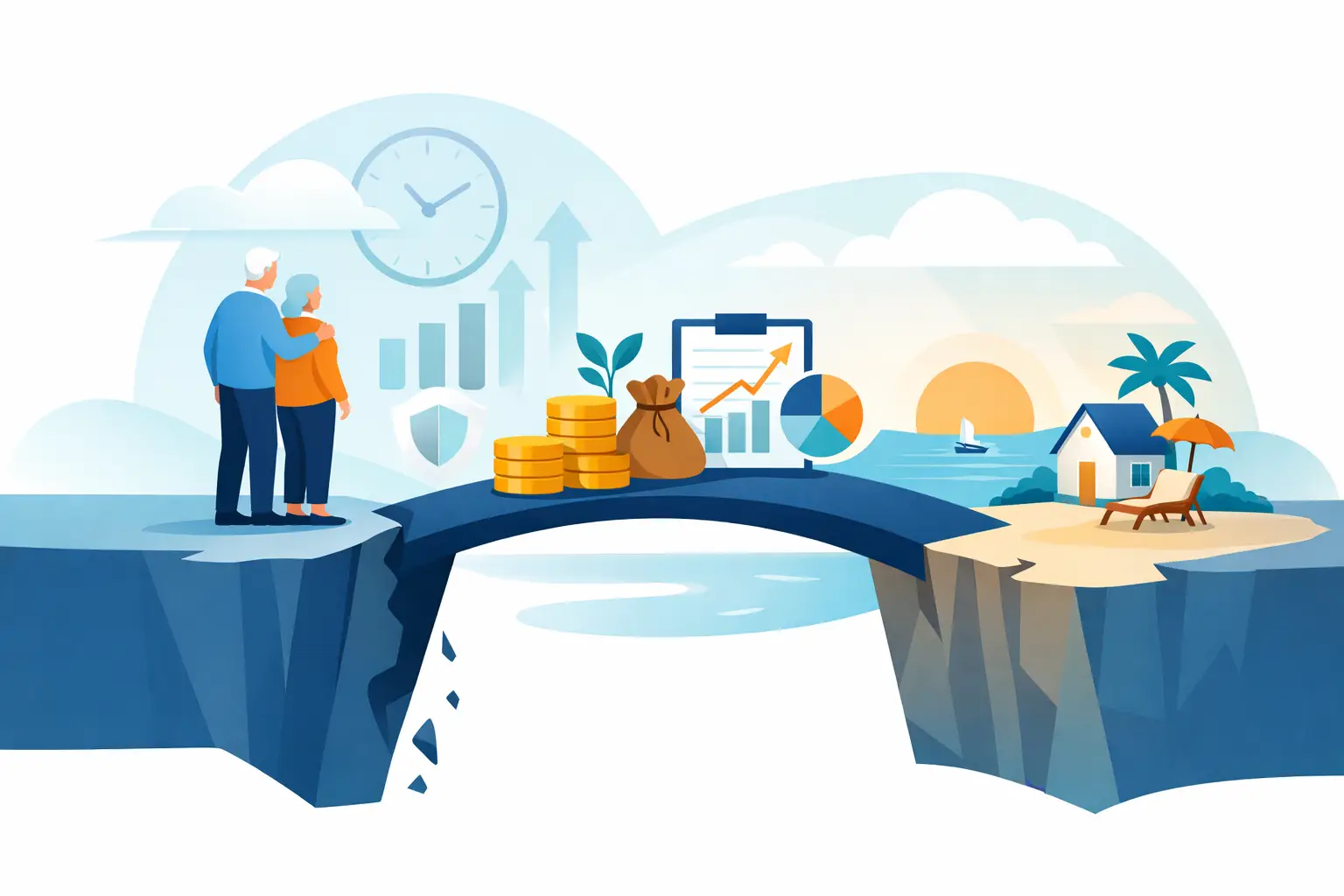
A retirement shortfall rarely shows up all at once. It usually starts with a simple question: Will what I have actually be enough when paychecks stop? If you have ever wondered how to avoid retirement income gaps, you are asking the right question early enough to do something about it. And if you want help reviewing your options, a free, no-obligation consultation can help you see where the risks may be hiding.
What creates retirement income gaps?
Most people do not run out of money because they made one dramatic mistake. They run into trouble because several smaller issues stack up over time. Maybe Social Security replaces less income than expected. Maybe a 401(k) took a hit at the wrong time. Maybe healthcare costs rise faster than the plan. Or maybe retirement lasts longer than anyone guessed.
That is why income gaps can affect both careful savers and people who feel behind. The real issue is not just how much you saved. It is whether your income sources are built to keep paying through the different seasons of retirement.
A useful question to ask is this: if one source of income slowed down or stopped, what would pick up the slack? If that answer is unclear, that is often where the gap begins.
How to avoid retirement income gaps before retirement starts
The best time to fix a retirement income gap is before it becomes your monthly reality. That does not mean you need a perfect plan. It means you need a realistic one.
Start by looking at your expected monthly expenses, not just your total nest egg. Many people focus on the account balance because it feels measurable. But retirement works month by month. Housing, food, insurance, taxes, transportation, prescriptions, and family support all come due in real time.
Once you know what you will likely need, compare that number to dependable income sources such as Social Security, pensions, annuities if appropriate, and other predictable cash flow. Then compare that to income that depends on market performance or withdrawals from invested assets. The gap is the difference between what must be covered and what is truly dependable.
This is where many families feel relief. Why? Because once the gap has a number, it becomes a planning problem instead of a fear in the background.
Build retirement income in layers
One of the clearest ways to reduce risk is to think in layers rather than relying on one account to do everything.
Your first layer should cover essential expenses. This usually means the bills you cannot skip, like housing, utilities, groceries, insurance, and core healthcare costs. Many retirees want these basics covered by more predictable income sources, so market swings do not directly threaten daily life.
The second layer can support lifestyle choices such as travel, hobbies, helping children or grandchildren, and larger discretionary spending. This part can often tolerate more flexibility because it is not tied to survival.
The third layer is legacy and protection planning. This is the part many people overlook when they are focused only on retirement spending. But what happens if one spouse passes away, a long-term care event appears, or taxes eat into what is meant for loved ones? A plan that ignores family protection can create a different kind of income gap later.
If you are not sure whether your current savings are arranged this way, a free, no-obligation consultation can help you sort out which dollars are meant for income, which are meant for growth, and which are meant for protection.
Do not assume Social Security will carry the plan
Social Security matters. For many households, it is the foundation. But it is rarely designed to replace your full working income.
The timing of when you claim benefits can also change your monthly income significantly. Claiming early may provide cash flow sooner, but it can reduce the monthly amount for life. Waiting can increase benefits, but only if your health, work status, and other income sources make that delay practical.
So the better question is not simply, When should I take Social Security? It is, How does Social Security fit into the rest of my income plan? That shift in thinking often leads to better decisions.
For married couples, survivor income matters too. If one Social Security check goes away after a spouse dies, would the surviving spouse still have enough to live well? That is one of the most overlooked retirement income gap risks in America.
Market risk matters more once withdrawals begin
During your working years, market drops can feel temporary because time is still on your side. In retirement, the math changes. If you are withdrawing income while your investments are down, losses can become harder to recover from.
This does not mean you should avoid growth altogether. It means your income strategy should respect timing risk. Some money may still need to grow. But money needed for near-term income may need a different role.
This is where trade-offs matter. A portfolio built only for growth may create too much volatility. A plan built only for safety may not keep up with inflation. The right mix depends on your age, income needs, health, family goals, and tolerance for uncertainty.
That is why broad advice from friends or online calculators often falls short. Your retirement is personal. Your income plan should be too.
Healthcare and long-term care can quietly widen the gap
A lot of retirees underestimate how much healthcare can affect long-term income. Premiums, out-of-pocket costs, prescriptions, dental needs, hearing care, and possible long-term care support can put steady pressure on monthly cash flow.
If one spouse needs extended care, the healthy spouse may suddenly face much higher expenses with less flexibility. Have you thought about what that would do to the rest of the plan? Would assets need to be sold at the wrong time? Would the surviving spouse be forced to reduce their standard of living?
This is where protection planning becomes part of income planning. Insurance solutions, benefit strategies, and asset positioning can all play a role depending on the household. There is no one-size-fits-all answer, but ignoring the issue usually costs more than facing it.
If that concern has been sitting in the back of your mind, this is a good time to address it. A free, no-obligation consultation can help you identify whether healthcare exposure is one of the biggest threats to your retirement income.
Taxes can create a gap even when savings look strong
Two retirees can have the same account balance and very different retirement outcomes depending on taxes. Withdrawals from traditional retirement accounts may increase taxable income. Social Security can become partially taxable. Required minimum distributions can push income higher than expected.
This catches many families off guard because they saved faithfully, but never mapped out how those dollars would be taxed once retirement begins. If too much of your future income is exposed to taxes, your spendable income may come in lower than planned.
That does not mean taxes can be eliminated. It means they should be planned for. The right withdrawal order, the right account mix, and the right timing can make a meaningful difference over time.
Review old accounts and scattered savings
Many people have old 401(k)s, IRAs, savings accounts, and insurance policies spread across different employers and institutions. On paper, it may look like a decent amount of money. In practice, it can be hard to tell what each piece is meant to do.
Is that old 401(k) still aligned with your retirement timeline? Is too much cash sitting idle? Is there enough protection for a surviving spouse? Are your beneficiary choices up to date? These are not small details. They shape whether income keeps flowing when life changes.
Bringing those pieces into one coordinated strategy often reveals opportunities and risks that were easy to miss when everything was viewed separately.
The goal is not just retirement. It is confidence.
When people ask how to avoid retirement income gaps, they are often asking something deeper. They want to know whether they will be able to stay in their home, protect their spouse, handle rising costs, and still leave something meaningful behind.
That is why a strong retirement plan is not only about numbers. It is about choices. The more intentional your income strategy becomes, the more freedom you keep later.
If you want clarity on where you stand, the next step is simple. Schedule a free, no-obligation consultation and look at your income picture with someone who can help you spot gaps before they become expensive problems. A solid plan can help you protect what you have built, create more predictable income, and move toward retirement with greater peace of mind.
The families who feel most secure in retirement are not always the ones who earned the most. They are often the ones who asked the right questions soon enough to act on them.