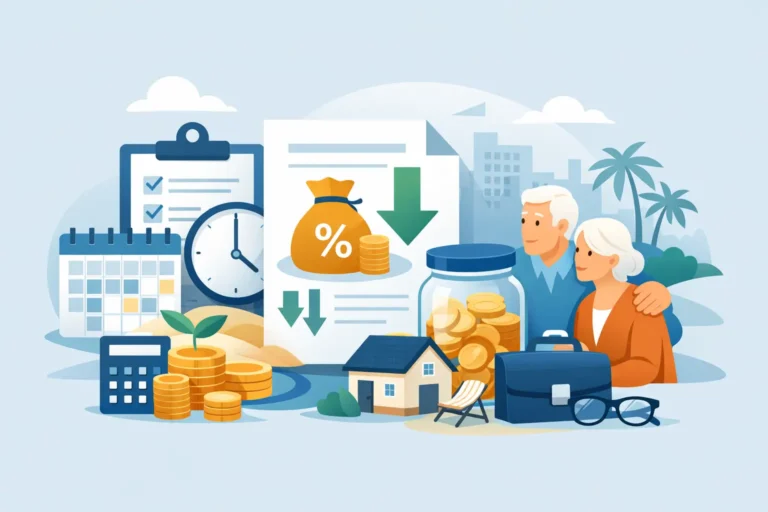

A lot of people spend years focused on building money, then realize too late they never built a plan to keep it. Others play defense so carefully that their wealth never gains enough momentum to support retirement, family goals, or a lasting legacy. That tension is exactly what makes wealth creation vs wealth preservation such an important conversation.
If you want to empower your financial future, you need both. The real question is not which one matters more. It is when each should lead, how they work together, and what tools make sense for your stage of life.
What wealth creation vs wealth preservation really means
Wealth creation is the process of growing your assets over time. That can include earned income, business ownership, real estate, retirement accounts, brokerage investments, and strategies that create cash value or passive income. It is the part of the plan focused on expansion.
Wealth preservation is about protecting what you have already built. That includes reducing unnecessary taxes, managing market risk, protecting income, planning for health events, creating liquidity, and making sure your assets transfer efficiently to the people you care about. It is the part of the plan focused on stability and continuity.
Many people treat these as separate phases, but in practice they overlap. A family with young children may need aggressive savings goals while also needing life insurance protection. A business owner may be growing revenue while also looking for tax-advantaged ways to protect accumulated gains. A pre-retiree may still want growth, but not at the cost of a major drawdown right before retirement.
That is why a smart financial strategy does not force an either-or choice. It builds growth with protection in mind.
Why the balance matters more than picking sides
There is a common mistake on both ends of the spectrum. Some people chase returns without thinking enough about risk, liquidity, or taxes. Others keep too much money in low-growth positions because safety feels better in the short term. Both approaches can create problems.
If your plan leans too heavily toward wealth creation, you may build assets that are exposed to market swings, poorly protected, or hard to pass on efficiently. A strong income and growing portfolio can still leave a family vulnerable if there is no protection strategy behind it.
If your plan leans too heavily toward wealth preservation, inflation can quietly erode your purchasing power. You may avoid losses on paper but still lose ground over time. This matters even more for people who want retirement income to last for decades or hope to leave something meaningful to children and grandchildren.
Financial confidence comes from coordination. Growth helps you move forward. Protection helps you keep what matters.
When to focus on wealth creation
Wealth creation usually carries more weight during your earlier and middle earning years, especially when you are still building your asset base. This is often the season for increasing income, contributing consistently, buying cash-flowing assets, and putting money into long-term strategies that can compound over time.
That does not always mean taking maximum risk. It means making intentional decisions that expand your financial capacity. For one person, that may be growing a business. For another, it may mean building retirement savings and adding real estate exposure. For someone else, it may involve using a properly structured life insurance strategy that builds cash value while supporting long-term protection goals.
This is also where tax treatment matters. Two people can earn similar returns and end up with very different outcomes depending on how much of that money is lost to taxes or penalties. Growth is not only about what you earn. It is also about what you keep.
When wealth preservation should take the lead
Wealth preservation becomes more urgent as your assets grow, your responsibilities increase, or your timeline shortens. If retirement is closer, if you support a family, if you own property, or if you have accumulated meaningful savings, protection can no longer be an afterthought.
This is where people start thinking more carefully about volatility, long-term care concerns, estate planning, business continuity, and guaranteed access to funds. It is also where insurance often moves from being seen as a basic expense to being recognized as a strategic asset.
Preservation is not just for the ultra-wealthy. A middle-income family with one or two income earners has a real need for it. A health event, a death in the family, a market downturn, or a poorly timed tax hit can disrupt years of progress. Protecting against those risks is part of building real financial freedom.
The tools are different, but the goal is the same
Wealth creation tends to rely on growth-oriented assets and income strategies. That can include equities, business investments, real estate, retirement accounts, and vehicles designed for long-term accumulation. Wealth preservation leans more toward protection and efficiency through asset allocation, insurance, tax planning, legal structure, and legacy planning.
Still, some tools can support both goals at once.
Life insurance is one example when it is properly designed for the client’s goals. Many people think of life insurance only as a death benefit. In reality, certain strategies can also provide living benefits, tax advantages, cash value growth, and a more efficient way to transfer wealth. That is especially appealing for families who want protection today without giving up on long-term opportunity.
Indexed Universal Life, or IUL, often comes up in this conversation because it can sit in the middle ground between growth and protection. It is not a fit for everyone, and it should never be treated like a magic solution. But for the right person, it can offer market-linked growth potential with downside protection features, along with tax-advantaged access and a death benefit that supports legacy planning. That combination is exactly why many people exploring wealth creation vs wealth preservation take a closer look at it.
Real estate can work in a similar way. It can create appreciation and passive income, which supports wealth creation, while also serving as a tangible asset that diversifies a broader financial plan. But it also comes with trade-offs like illiquidity, maintenance costs, tenant risk, and market cycles. A good strategy respects both the upside and the responsibility.
How to build a plan that does both
The strongest financial plans start with your life, not a product. Your age, income, tax bracket, family obligations, risk tolerance, and long-term goals all shape the right mix of growth and preservation.
If you are early in your journey, your plan may lean more heavily toward accumulation, but you still need foundational protection. If you are closer to retirement, your plan may shift toward preserving principal and creating reliable income, while still keeping part of your portfolio positioned for growth. If your main goal is legacy, then transfer efficiency, tax exposure, and liquidity become central decisions.
This is where personalized planning matters. A strategy that works for a dual-income family in their 30s may be completely wrong for a business owner in their 50s or a retiree thinking about income distribution. The right answer is rarely extreme. It is usually a thoughtful combination.
A coordinated approach often includes three layers. First, protect income and family with the right insurance foundation. Second, build assets through disciplined saving, investing, and passive income opportunities. Third, preserve gains with tax-aware planning and a clear transfer strategy. When those layers work together, you are not simply accumulating money. You are creating a structure that can support your life now and your legacy later.
Avoid the trap of doing one too late
One of the biggest financial regrets people have is waiting too long to start. Some wait too long to invest. Others wait too long to protect what they have built. Both delays can be costly.
Starting wealth creation late means less time for compounding to do its work. Starting wealth preservation late can mean higher insurance costs, fewer planning options, and more exposure to taxes or market losses at the wrong time.
That is why the best time to think about both is now, even if your plan is still simple. You do not need a perfect portfolio or a large estate to begin building intentionally. You need clarity on where you are, where you want to go, and what risks could interrupt that path.
At Legacy Transfer Consulting, that is the heart of the conversation. Growth matters. Protection matters. Peace of mind matters. When your strategy respects all three, your path to financial freedom starts looking a lot more secure.
The goal is not just to make more money or just to avoid loss. It is to build a life where your wealth can support your family, your future, and the legacy you want to leave behind.